
I’ve been watching the Indian car market closely, and honestly speaking, it has changed more in the last few years than we expected. Earlier, we were happy with a simple hatchback. Now? We want SUV styling, big ground clearance, modern tech, strong mileage — and all of it without crossing our budget. And to be honest, this exact shift is why the Renault Kiger became such a big deal.
When Renault launched the Renault Kiger, I don’t think many of us thought it would shake the segment. It looked good, yes. It was affordable, yes. But segment leader? That sounded unlikely.
Surprisingly, that’s exactly what started happening. Especially in tier-2 cities and smaller towns, people began noticing it. The reason was simple. It looked like a proper SUV, but the price felt like a hatchback. And for Indian buyers, that combination is hard to ignore.
Now in 2026, the Kiger has been refined again. A few feature upgrades. Better interior finish. Small tuning improvements. Nothing dramatic — but enough to keep it relevant.
So the big question we all have is:
Is Renault Kiger still worth buying in 2026?
Let’s break it down properly.
Renault Kiger 2026 Price in India (Expected)
If you ask me what Kiger’s biggest strength is, I won’t even think twice. It’s the pricing.
Even today, it remains one of the most affordable compact SUVs you can buy.
Expected ex-showroom prices:
- RXE – ₹6.20 lakh
- RXL – ₹7.10 lakh
- RXT – ₹8.05 lakh
- RXT (O) – ₹8.85 lakh
- RXZ – ₹9.60 lakh
- RXZ Turbo CVT – ₹10.80 lakh
On-road, you’re looking at roughly ₹7.1 lakh to ₹12.5 lakh depending on your city.
And honestly, for someone upgrading from an Alto, WagonR, or Swift, this pricing feels achievable. You get the SUV look without stretching your EMI too much. That’s powerful.
Engine Options & Performance
Renault didn’t overcomplicate things. They kept two engine choices — one for mileage-focused buyers and one for those of us who like a little punch while driving.
1. 1.0L Naturally Aspirated Petrol
- 72 PS power
- 96 Nm torque
- 5-speed manual / AMT
This engine is simple and honest. It’s not fast. It won’t push you back in your seat. But it’s easy to live with.
Light clutch. Smooth steering. Relaxed driving. If you’re buying your first car or mostly driving in city traffic, this one feels stress-free. And sometimes, that’s exactly what we need.
2. 1.0L Turbo Petrol
- 100 PS power
- 160 Nm torque (manual)
- 152 Nm torque (CVT)
- 5-speed manual / CVT
Now this is where things get interesting.
The best part is when the turbo kicks in around 2000 RPM. Suddenly the car feels alive. Honestly, it’s surprisingly fun for a budget SUV.
If we drive regularly on highways, I’d strongly suggest going for the turbo. The difference is noticeable.
Mileage (Real World)
Let’s be real — mileage still matters a lot in India. Fuel prices aren’t getting cheaper.
Here’s what you can expect:
- 1.0 NA – Claimed 20 km/l | Real 16–18 km/l
- Turbo Manual – Claimed 20 km/l | Real around 17 km/l
- Turbo CVT – Claimed 19 km/l | Real 15–16 km/l
Honestly, these are decent figures. The turbo CVT especially makes city traffic easier because you don’t have to deal with constant gear shifting. And when you’re stuck in traffic daily, that comfort matters.
Exterior Design – Why We Notice It
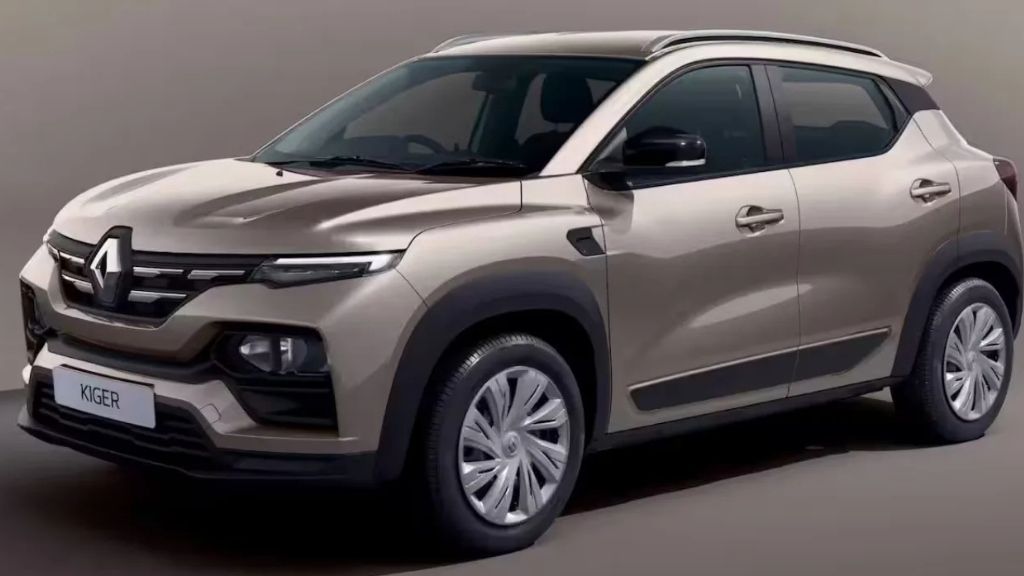
I’ll say this clearly — pictures don’t do the Kiger justice.
When we see it on the road, it actually looks bigger than it is. That high bonnet line gives it presence.
Key highlights:
- Split LED headlamps
- C-shaped LED DRLs
- Roof rails
- Dual-tone options
- 16-inch alloy wheels
And then there’s the 205 mm ground clearance. Honestly, that’s better than some more expensive SUVs. For Indian roads full of potholes, speed breakers, and village routes — this is a blessing.
We don’t have to slow down at every bad patch thinking something will scrape.
Interior & Cabin Experience
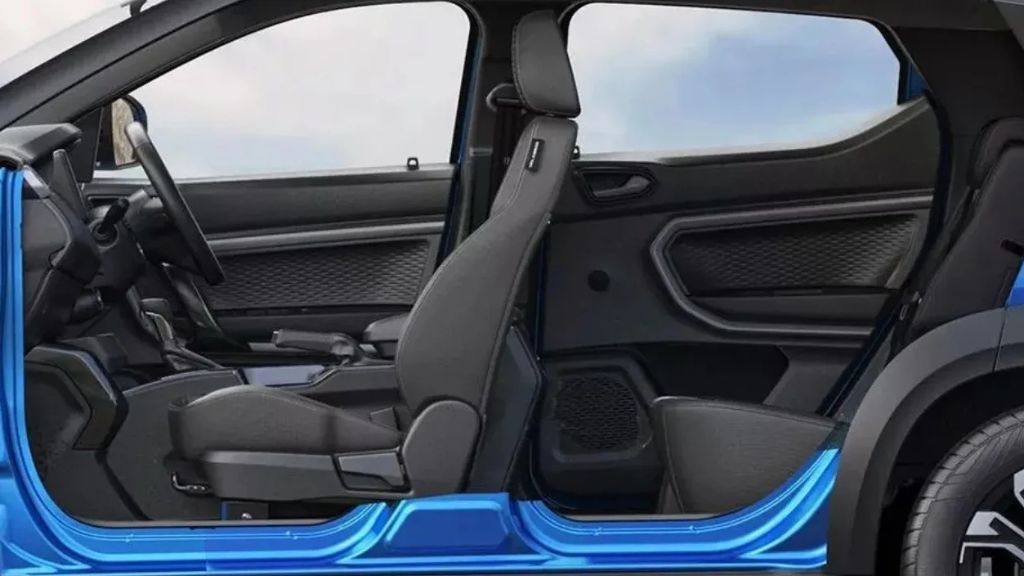
Earlier, people complained about the interior plastics. Renault seems to have listened.
The 2026 version feels more solid. Not luxury-level, but definitely improved.
Inside, we get:
- 8-inch touchscreen
- Wireless Android Auto & Apple CarPlay
- Digital instrument cluster
- Push-button start
- Steering-mounted controls
- Rear AC vents
- Wireless charger (top variant)
Seat comfort is surprisingly good. Even taller passengers don’t feel cramped in the rear.
Boot space? 405 litres. That’s big. If we travel with family or carry luggage often, this makes a difference.
Features – More Than We Expect
Some people assume that because Kiger is affordable, features must be basic.
Honestly, that’s not true anymore.
Top features include:
- Cruise control
- 4 airbags
- Rear parking camera
- Hill start assist
- Traction control
- Tyre pressure monitoring system
- Ambient lighting
- Smart access card key
For the price, this list feels impressive. We’re not missing out on essentials.
Safety
After earlier criticism, Renault worked hard here.
The Kiger received a 4-star rating in Global NCAP for adult protection. That gives confidence.
You also get:
- ABS + EBD
- Electronic Stability Program
- Hill start assist
- Strong body structure
For a budget SUV, safety is no longer a weak point.
Driving Experience
This is where many people change their opinion.
In the City
Light steering.
Easy parking.
Good visibility.
Comfortable suspension.
Daily office commute becomes simple. No drama.
On the Highway
The turbo variant feels much better here. It stays stable around 90–100 km/h.
It’s not a sports car. And it doesn’t pretend to be one. But it’s comfortable and predictable. That matters more for most of us.
Pros and Cons
What I Like
✔ Very affordable SUV
✔ Excellent ground clearance
✔ Good real-world mileage
✔ Large boot space
✔ Comfortable ride quality
What Could Be Better
✖ Base engine feels underpowered
✖ Interior plastics still average
✖ Some road noise at higher speeds
Nothing deal-breaking, but worth knowing.
Service Cost & Maintenance
This is another area where Kiger makes sense.
Yearly service cost usually falls between ₹3,000 – ₹5,000.
Parts availability is good.
Warranty is 3 years, extendable.
Compared to many SUVs in this price range, maintenance feels reasonable.
Should We Buy Renault Kiger in 2026?
Buy it if:
- Budget is under ₹11 lakh
- It’s your first car
- You drive mostly in the city
- You want SUV styling
- You care about mileage
Avoid it if:
- You want premium interiors
- You expect strong acceleration
- You prefer a diesel engine
Competitors
The main rivals include:
- Tata Punch
- Nissan Magnite
- Hyundai Exter
- Maruti Fronx
Each has its strengths. Punch feels tougher. Exter offers Hyundai refinement. Magnite is similar in value.
But if we look at overall balance — space + price + features — Kiger still holds strong.
My Honest Verdict
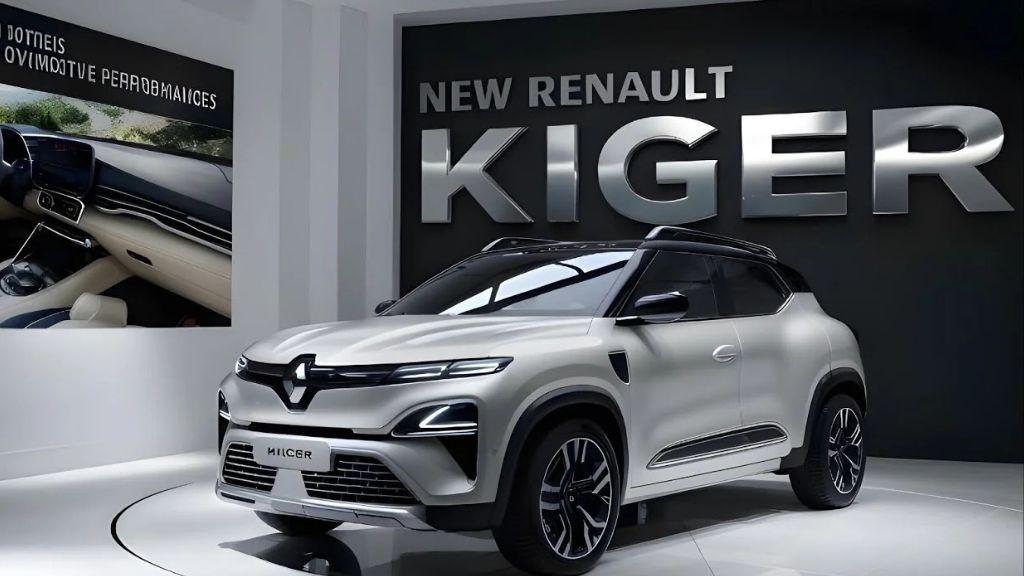
To be honest, the Renault Kiger 2026 is not trying to be premium. It’s not trying to be the fastest. It’s not trying to impress luxury buyers.
It’s trying to solve real problems.
Bad roads.
High fuel prices.
Tight parking.
Limited budgets.
And honestly speaking, it does that well.
If we choose the turbo variant, the experience feels much more complete. The car becomes enjoyable, not just practical.
In simple words, I’d say this:
Kiger works because it understands the middle-class Indian buyer. And when a car understands its audience, it usually succeeds.
1 thought on “Renault Kiger 2026 Price in India, Mileage, Features & Full Review – Is This Still the Best Budget SUV?”