
If you’ve been watching the car market lately, you’ll probably agree with me — India’s compact SUV space is absolute madness right now. Every other month, there’s a new launch. Still, buyers keep waiting. We keep waiting. Honestly speaking, we’re all searching for something that feels fresh.
And that’s exactly why the Hyundai Bayon is suddenly getting so much attention.
We already know Hyundai dominates this segment with the Hyundai Venue and the Hyundai Creta. But to be honest, there’s still a small gap. Some people don’t want a hatchback anymore. At the same time, they don’t want to spend Creta-level money. That middle ground? That’s where Bayon fits beautifully.
The best part is — Bayon is already selling in global markets like Europe. And since it’s doing well there, talks about an India launch around 2026 are getting louder.
And if Hyundai gets the pricing right? Surprisingly, it could shake up the entire segment. I’m talking about cars like Tata Nexon, Maruti Brezza, Toyota Taisor, Maruti Fronx, and even Hyundai’s own Venue.
Let me explain why I feel that way.
So, What Exactly Is Hyundai Bayon?
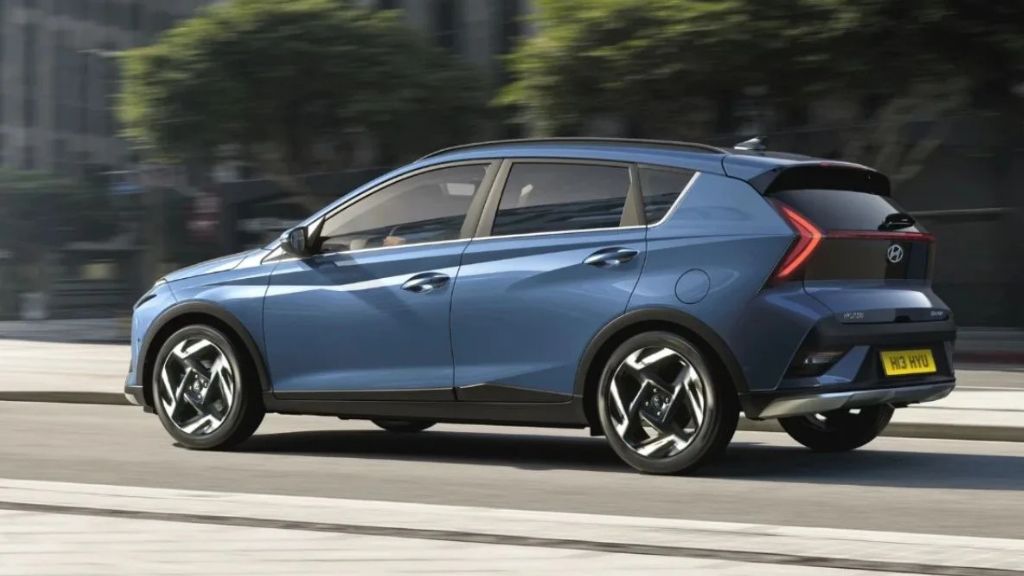
In simple words, it’s a sub-4 meter crossover built on the Hyundai i20 platform.
Here’s how I see it:
- More premium than a hatchback
- Smaller and cheaper than Creta
- Styled in a way that feels more modern than Venue
It’s clearly designed for city buyers. People like us who want stylish looks, smooth driving, good mileage, and modern tech without stretching the budget too much.
And let’s be real — that’s exactly what most Indian buyers want right now.
Why I Think Hyundai Will Bring Bayon to India
I see three big reasons.
1. Compact SUVs Are Selling Like Crazy
Look at sales charts. Compact SUVs are outselling sedans and hatchbacks. Nexon, Brezza, Venue, Sonet — they’re always in top lists.
Hyundai isn’t blind to that. If demand is exploding, they’ll want a bigger share of it.
2. Venue Is Starting to Feel Old
Yes, the facelift helped. But buyers now expect bigger screens, ADAS safety, fresh design language — all the modern stuff.
To be honest, Venue still feels good, but Bayon feels newer. And that matters.
3. Localization Is Easy
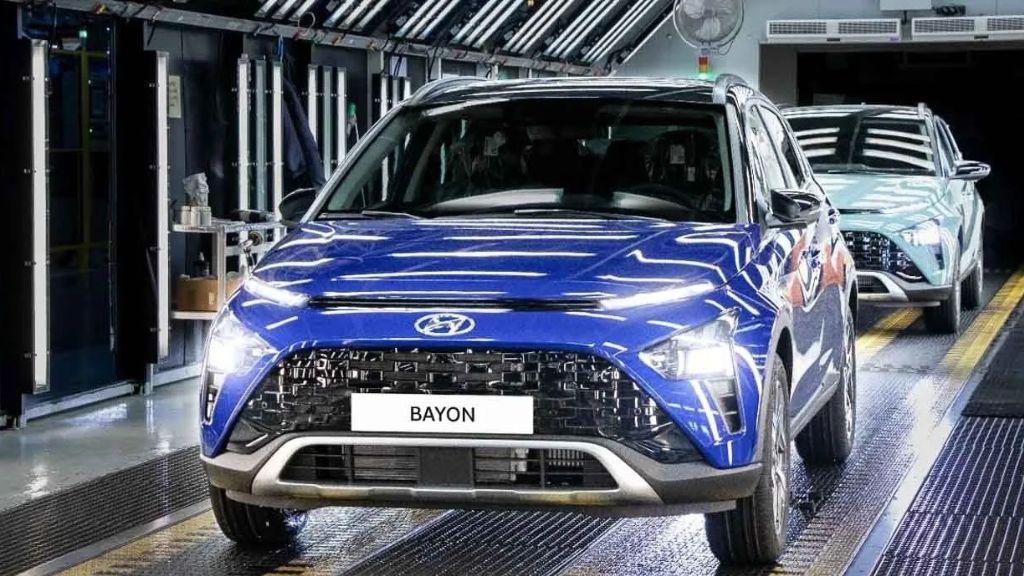
Since Bayon is based on the i20 platform, and i20 is already manufactured in India, production becomes simpler and more cost-effective.
That makes the launch more realistic.
Expected Price in India
Now this is where things get interesting.
If Hyundai prices it between ₹9 lakh and ₹14 lakh (ex-showroom), it sits perfectly between Venue and Creta.
And we all know Hyundai loves aggressive introductory pricing. I wouldn’t be shocked if the base variant starts around ₹8.99 lakh.
At that price, it directly challenges Nexon, Brezza, Fronx, Taisor, and Sonet.
Pricing will decide everything. No doubt about it.
Design – And Honestly, It Looks Fresh
I’ve seen the global model, and surprisingly, it doesn’t look like a typical Hyundai.
You get:
- Split LED headlamps
- Full-width DRL light bar
- Sharp bonnet lines
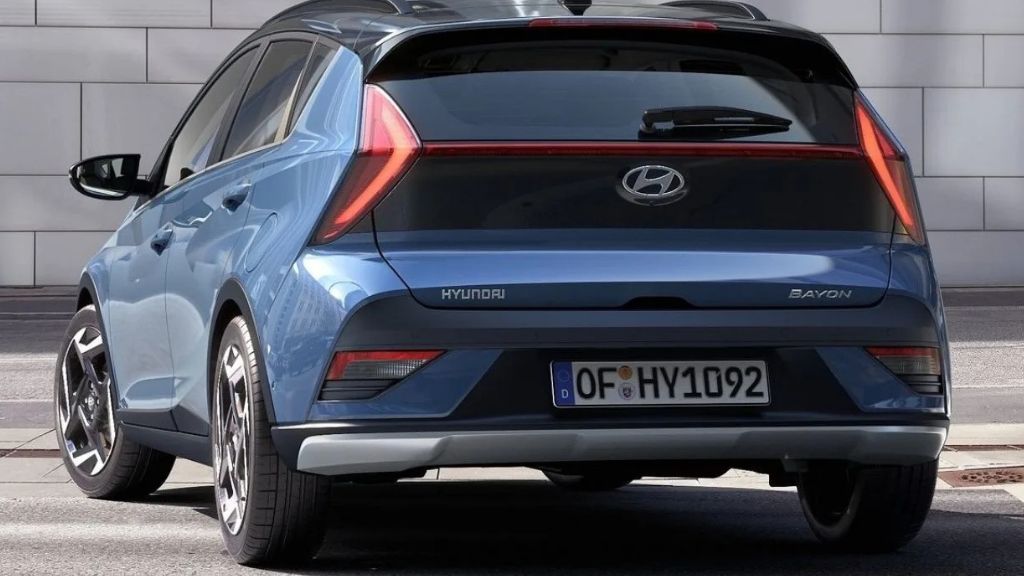
- Coupe-inspired rear
- Arrow-shaped connected tail lamps
- Dual-tone alloys
- Muscular bumper
From the back, I honestly think it looks more premium than Venue. Some people even say it feels like a mini Creta mixed with a Hyundai Tucson vibe.
That’s impressive for a sub-4 meter SUV.
Interior – This Is Where It Gets Exciting
The biggest surprise for me? The cabin.
Hyundai has clearly focused on technology and comfort.
Expected highlights:
- Dual 10.25-inch screens
- Ambient lighting
- Premium upholstery
- Wireless Android Auto & Apple CarPlay
- Rear AC vents
- Wireless charging
- Push start
- Digital driver display
The layout looks similar to i20 but more upscale. Clean. Driver-focused.
And the boot space? Around 400+ litres globally. That’s excellent for this segment. Honestly speaking, that’s better than many rivals.
Engine Options (Likely for India)
Globally, Bayon is petrol-only. India will probably follow the same approach.
1.2L NA Petrol
~83 PS
5-speed manual
Perfect for mileage-focused buyers
1.0L Turbo GDi Petrol
~120 PS
iMT or 7-speed DCT
For those who enjoy a little punch
No diesel expected. Hyundai is clearly reducing small diesel options.
Driving experience? I expect smooth steering, light clutch, easy city manners, and stable highway cruising. This won’t be a sporty machine like Nexon. It’ll be comfort-oriented. And honestly, most people prefer that.
Mileage Expectations
Mileage could be one of its strongest selling points.
- 1.2 Petrol: 18–20 km/l
- 1.0 Turbo: 19–21 km/l
Hyundai engines are usually refined, so real-world figures should be competitive.
Safety – And This Time Hyundai Knows It Matters
After past criticism, Hyundai has been taking safety more seriously.
Expected features:
- 6 airbags standard
- ABS with EBD
- ESC
- Hill hold
- Rear camera
- TPMS
- ISOFIX mounts
- 360-degree camera (top variants)
- Possible ADAS
If ADAS comes, that’s a big move. It would instantly make Bayon one of the most tech-loaded compact SUVs in India.
Bayon vs Venue – My Honest Take
Venue will likely remain the value-focused option.
Bayon? That will feel more premium, more futuristic, slightly bigger inside, and loaded with tech.
So if someone wants budget-friendly, Venue works. If someone wants the “latest and smartest,” Bayon makes more sense.
Bayon vs Nexon & Brezza
Against Nexon, Bayon may lose in rugged build perception. But in refinement and features? I think Bayon wins.
Against Brezza, Maruti offers reliability and resale. But design and interior feel? Bayon looks more modern.
Hyundai seems to be targeting comfort and tech lovers rather than hardcore rugged SUV buyers.
Expected Timeline
Nothing official yet.
But industry buzz suggests:
Reveal: Late 2025
Launch: Early to mid 2026
Production will likely happen at Hyundai’s Tamil Nadu plant.
Should You Wait?
I’d say wait if:
✔ You’re planning Venue top model
✔ You drive mostly in the city
✔ You want premium feel without paying Creta money
✔ You care about design and tech
Maybe don’t wait if:
✖ You want diesel
✖ You need high ground clearance for rough rural roads
Why I Think Bayon Could Be a Big Hit
Here’s the thing.
People want premium interiors.
We want good mileage.
We want stylish SUVs.
We want manageable EMIs.
Creta is getting expensive. Venue feels slightly compact for some buyers.
Bayon fills that middle space perfectly.
And that’s why, honestly speaking, car enthusiasts are already watching it closely. It’s not just another launch. It feels strategic.
FAQs – Hyundai Bayon India
1. Will Hyundai Bayon launch in India?
Not officially confirmed, but signs strongly suggest a 2026 launch.
2. Expected price?
Around ₹9–14 lakh ex-showroom.
3. Bigger than Venue?
Similar length, but better space usage and larger boot.
4. Diesel engine?
Most likely no. Petrol only.
5. Mileage?
18–21 km/l expected.
6. Sunroof?
Top variants should offer an electric sunroof.
7. ADAS available?
Possible in top trims.
8. Better than Nexon?
For safety, Nexon feels stronger. For features and refinement, Bayon may have the edge.
9. Booking timeline?
Likely 1–2 months before launch in 2026.
10. Wait or buy Venue now?
If you want the latest design and features, I’d personally wait.
My Final Take
To be honest, the Hyundai Bayon doesn’t feel like just another SUV addition. It feels like Hyundai carefully spotted a gap and decided to fill it smartly.
If pricing is aggressive, this could easily become one of the most talked-about launches of 2026. And interestingly, it might not just compete with rivals — it might steal buyers from Venue too.
If you’re planning a new car in 2026, I’d definitely keep my eyes on this one. Sometimes the smartest choices are the ones that sit perfectly in the middle.
3 thoughts on “Hyundai Bayon India Launch 2026: Expected Price, Features, Engine, Mileage & Why This Compact SUV Could Disrupt the Segment”